
W189 300d: The Father of the S-Class

Updated: Aug 28

W189 300d: The Father of the S-Class: The W189 300d was produced from 1957-1962 and was the last of the so-called “Adenauers”, featuring various upgrades over previous models and representing the flagship model of the era. Though its predecessors, the W186 300a, b, and c, were all top-of-the-line luxury tourers in their own right, the 300d went above and beyond introducing new features such as a pillarless saloon and indirect port injection.

While popularized through use in parades, the W189 300d shared many innovations and mechanical components with the iconic W198 300SL, making it surprisingly capable and reliable. Though comparable in terms of luxury, the 300d, powered by the M189, a 3.0L inline-6 fed by indirect port injection, provided superior performance than Rolls-Royce or Bentleys of the age.
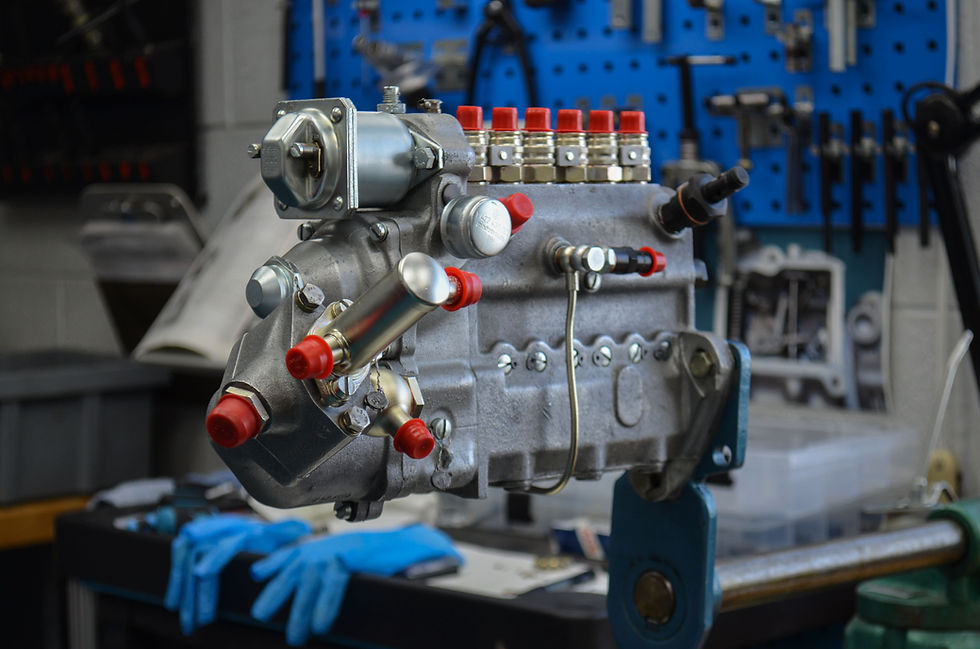
The 300d employed Bosch fuel injection pump models PES6KL 70/320 R9/22 and the PES6KL 70/320 R7 which are examples of pneumatic governor fuel injection pumps. Pneumatic governor fuel injection pumps use a diaphragm unit and the venturi effect to create a vacuum based on air flow velocity which, in combination with gasoline injection, controls engine speed. Indirect port injection provided a more refined method of getting fuel to the engine than previously used carburetors and, while initially more expensive, saved cost in reduced maintenance and increased fuel efficiency over the long haul. Click the link above for more information and pictures of pneumatic governor fuel injection pumps.


A favorite of business leaders, dignitaries, and politicians, including Konrad Adenauer, the first chancellor of West Germany, the W189 300d was available in a few body styles including cabriolet and limousine along with offering many customizable options such as a sunroof, glass partition and even dictation machines. At almost 10 inches longer than the W186, the W189 matched the interior space of the long wheelbase Rolls-Royce Silver Cloud, it’s main competitor. While typically associated with its successor, 3 “Pullman” variants were also produced, including a customized landaulet which served as the Popemobile starting in 1960. Just over 3,000 saloons and 65 cabriolets were produced during its six-year run along with three “pullman” variants. In 1961 the contemporary-styled W112 was released and overlapped production of the W189 for about a year. In 1963 the W100 600 Pullman or “Grosser Mercedes” was released and temporarily held the title of the most expensive production car on the market.


Stay tuned for more in-progress reports and check out our Classic Icons page to learn more about important models in Mercedes-Benz history.

Comments